From the advanced basic materials to eco-friendly cars and
the components of renewable energy systems,
we move forward into world-class technology.
Metal Powders
- Atomization
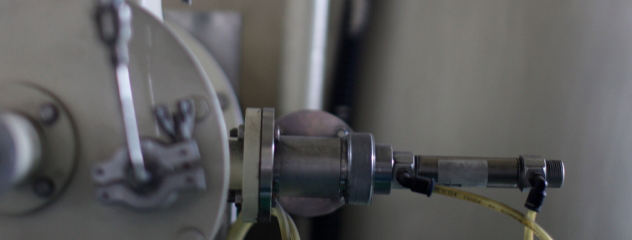
- Atomization is a metal powder manufacturing process in which molten metal at high temperatures collides with a pressured medium (liquid or gas) to be scattered and then solidified. We apply the atomizing technique and plasma technique using the pressured medium to produce finer powder with high purity. Also, we have produced different types of powder for various applications by acquiring and applying a range of alloy powder manufacturing technologies.
- Functional Metal Powders
- We have developed a range of powders with various shapes such as spherical, flake, and dendrite by acquiring new coating technologies to respond to the rapidly increasing demand for EMI protection in advanced electronic components, such as electromagnetic shielding and noise removal. We are developing technology to precisely control the composition, content, and surface condition of coated layers, which allows these powders to provide the best performance when applied to advanced electronic components.
R&D Area
- Ultrafine Cu and alloy powder
- Fe/Ni-based ultrafine materials
- Magnetic materials for electronic components
- High-cleanliness alloy materials
- Functional filters
- Nanotechnology
- Alloy materials for 3D printing
Technology
- Ultrafine powder technology
- Particle shape control technology
- High-cleanliness powder manufacturing technology
- Composition control technology
- Metal, ceramic, and polymer coating technology
- Surface property control technology
- Dispersibility technology
- Plasma spheroidization and refinement technology

Magnetic Powder Cores
Chang Sung Corporation’s soft magnetic metal powder cores are vital components for a variety of electronic products, including IT devices. With years of experience in manufacturing raw materials and component processing technology, we are now focusing on designing and developing magnetic materials and components with excellent performance at high frequencies and large currents for the next generation power systems with high functionality (EVs, PV/fuel cell systems, etc.)
R&D Area
- Soft Magnetic
- Metal Powder Core
- & Magnetic Application
Technology
- Ceramic insulation and coatings
- Manufacturing technology of metal powder molding for high strength and high density
- Technology to develop new alloys
- Developed a Soft Magnetic New Application
Coils
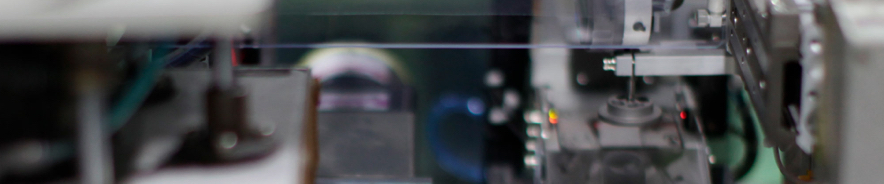
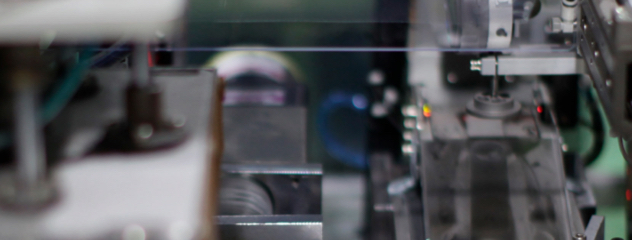
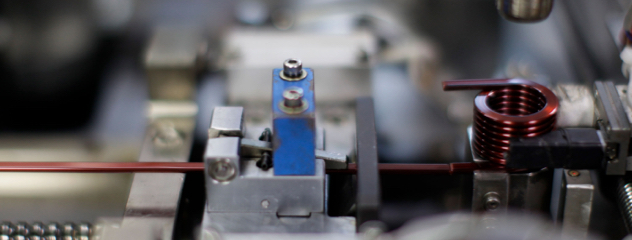
CSC’s coil products are used as inductors and high frequency transformers, which are indispensable for eco-friendly electric vehicles and the power converters of solar inverters. We are developing inductors using inhouse developed soft magnetic powder cores and magnetic paste, as well as compact/high-efficiency inductors for eco-friendly cars and low-loss high-frequency inductors for PV systems.
R&D Area
Technology
Electrical
components
- High current density inductor
- Heat dissipation structural design
- Concentrated winding technology
- High withstand voltage coil manufacturing technology
Solar inverter
- Inductor with noise reduction
- Improved heat dissipation technology
- High efficiency inductor design technology

Functional Pastes
In the low-temperature-curing paste field, continuous focus is placed on developing products with improved printability that can allow for a reduction in the line width of electrodes, highly-conductive products that can meet the demand for increasing the current density, and high-reliability products that result in less substrate deformation and a small variation in resistance according to the external environments.
The high-temperature-Sintering paste field retains its focus on developing paste products with high dispersibility, high printability, and low contractibility, which are essential to achieving a high stacking capability and the modularization of electronic parts, as well as substrate materials and high-reliability products that can replace solder products to meet the growing demand for electrical and electronic parts.
Also, attempts are being made in parallel to develop new materials that can replace expensive precious-metal fillers that have been applied thus far.
R&D Area
Technology
Low-
temperature-
curing
paste
products
- Low-resistance conductive paste manufacturing technology
- Technology that achieves the dispersibility of resin and fillers
- Technology that achieves adhesion with various substrates
- Stabilization technology for environmental properties
High-
temperature
-Sintering
paste
products
- Technology for controlling the sintering properties of metal powder
- Surface roughness control technology based on dispersibility control
- Glass frit manufacturing technology for each application field
- Microcircuit printing technology based on fluidity control

EMC
We are aiming to achieve total solutions for addressing electromagnetic wave and heat dissipation issues and have developed noise suppressors using various types of magnetic materials and addressed heat dissipation issues by applying high-temperature conductive fillers. We are now designing and developing a series of EMC products with outstanding shielding, conduction, and cooling performance.
R&D Area
Technology
EMC
- Technology to produce flake-shaped magnetic metal powder
- Combination of Polymer/Magnetics and Polymer/Conductive material
- Manufacturing technology to product thinner laminating film
- Manufacturing technology three-dimensional shape magnetic materials
- Design of far field absorber
TIM
- A wide range of TIM sheets and liquid molding type products
- Combination of functions for different applications (heat dissipation + electromagnetic wave absorption)
- Eco-friendly filler materials with a higher heat conduction
Clad Metals
Clad metal refers to a material where two or more different kinds of metals are bonded through pressure welding (hot, cold, and explosion).
- 1. HOT (WARM) PRESSURE WELDING
- It is an approach where the bonded interface of materials is heated by electric resistance heat or by using a heating furnace to temperatures higher than their recrystallization temperature or softening temperature while also being subject to mechanical pressure so that the materials can be bonded. This method is applied when it is difficult to perform the plastic working process using the cold rolling process as in high-speed steel, or when the cold rolling may result in quality issues as in magnetic materials.
- 2. LOW PRESSURE WELDING
- Here, materials are bonded using the continuous pressure-welding equipment (cold rolling equipment) without being heated. After the cold bonding process, those metals of different kinds are subject to diffusion annealing for further bonding.
R&D Area
- Inlay Clad products
- Overlay Clad products
- Contact Tape products
- Parallel Clad products (Electron beam welding)
Technology
- Skiving and Location control technology
- Mechanical properties and Interfacial diffusion layer control technology
- Precision thickness control technology
- Precision Slitting and Burr control technology
- Surface roughness control technology
Powder Metallurgy
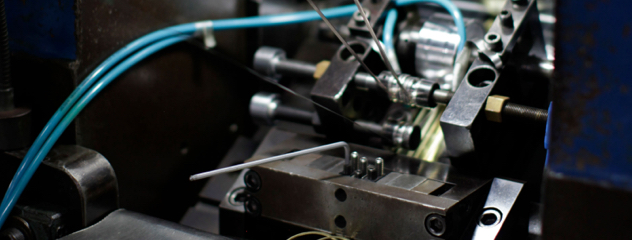
Sintered bearings are essential components for home appliances, office appliances, and IT technology, and especially for electronic and automotive parts. Our 35 years of accumulated technology has allowed us to develop high precision sintered bearings with micrometer level dimensional accuracy while providing a range of economic advantages and outstanding characteristics.
We are expanding our boundaries into heavy alloy fields such as anti-vibration bars, shielding materials with our high-density and high-strength sintered bearing manufacturing techniques and binder design technology for tungsten heavy alloys.
We are also developing the raw materials of the W-Cu alloys which have excellent thermal affinity with LED chips and outstanding heat dissipation performance to respond to the increasing demand for solutions to heat management issues associated with high-power LED applications.
R&D Area
Technology
High-
precision
bearings
- Raw powder and material design technology
- High-density forming technology
- High-precision mold design technology
- Process design and processing technology
Sintered
magnetic
parts
- Raw powder and material design technology
- High-density forming technology
- High-temperature sintering technology

Battery Materials
- Silicon composite for an anode of a lithium secondary battery
-
Silicon composite powder is a material that is added to the battery anode such as batteries for electric vehicles and ESS energy storage devices, and is a solution for improving the energy density and fast charging of the battery.
Based on Chang Sung Corporation’s powder manufacturing technology, we are focusing on technology research to secure high capacity, high efficiency and fast charging functions by applying silicon composite composition design and surface coating technology.
R&D Area
- Si Composite Powder
- Li Powder
Technology
- Design Technology for Silicon Composite Composition
- Manufacturing Technology of Silicone Composite sphericity
- Silicon composite surface coating technology
- Developed a new applications of lithium powder